All places in 기자

Saint Virgin Mary's Coptic Orthodox Church, also known as the Hanging Church, is one of the oldest churches in Egypt which dates to the third century. It belongs to the Coptic Orthodox Church of Alexandria.
Source: Wikipedia
The Ben Ezra Synagogue, sometimes referred to as the Geniza Synagogue, the Synagogue of the Levantines, or the Synagogue of the Jerusalemites is a former Jewish congregation and synagogue, located in the Fustat part of Old Cairo, Egypt.
Source: WikipediaCoptic Cairo is a part of Old Cairo which encompasses the Babylon Fortress, the Coptic Museum, the Hanging Church, the Greek Church of St. George and many other Coptic churches and historical sites.
Source: Wikipedia
The pyramid of Sahure is the funerary monument built for the Egyptian pharaoh Sahure of the Fifth Dynasty in the late 26th to 25th century BC. This initiated a period of pyramid building by Sahure's successors in Abusir, on a location earlier used by Userkaf for his sun temple.
Source: Wikipedia
Saints Sergius and Bacchus Church, also known as the Abu Serga Church, is one of the oldest Coptic Christian churches in Egypt, dating back to the 7th century.
Source: Wikipedia
An attraction in Giza.

A public artwork in Giza.

The pyramid of Neferirkare is the funerary monument built for the Egyptian pharaoh Neferirkare Kakai of the Fifth Dynasty in the 25th century BC.
Source: Wikipedia
The pyramid of Neferefre, or pyramid of Raneferef, is the unfinished funerary monument built for the Egyptian pharaoh Neferefre of the Fifth Dynasty in the 25th century BC.
Source: Wikipedia
The National Museum of Egyptian Civilization (NMEC) is a large museum located in Old Cairo, a district of Cairo, Egypt.
Source: WikipediaThe National Museum of Egyptian Civilization (NMEC) is a large museum located in Old Cairo, a district of Cairo, Egypt.
Source: Wikipedia
The pyramid of Nyuserre is the funerary monument built for the Egyptian pharaoh Nyuserre Ini of the Fifth Dynasty in the mid-25th-century BC.
Source: Wikipedia
The Coptic Orthodox Church of St. Barbara is one of the many famous Coptic Orthodox parishes that can be found in the district of Coptic Cairo.
Source: Wikipedia
The Coptic Museum is a museum in Coptic Cairo, Egypt with the largest collection of Coptic Christian artifacts in the world. It was founded by Marcus Simaika in 1908 to house Coptic antiquities. The museum traces the history of Egypt from its beginnings to the present day.
Source: Wikipedia
An attraction in Giza.

A museum in Giza.
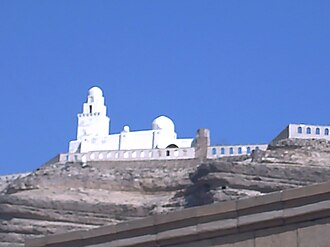
The Juyushi Mosque is a historic monument in Cairo, Egypt. The mosque is dated from 1086 CE, during reign of the Fatimid Imam-Caliph al-Mustansir Billah. Its construction was sponsored by Badr al-Jamali, the vizier of al-Mustansir, who was Amir al-Juyush.
Source: Wikipedia
Om Kalthoum Museum is a biographical museum in Cairo, Egypt. The Umm Kulthum Museum is dedicated to Umm Kulthum, the iconic Egyptian singer, songwriter, and actress.
Source: Wikipedia
An attraction in Giza.

The Egyptian Geological Museum is a museum in Cairo, Egypt. The museum was established in 1901 as part of the Egyptian Geological Survey, which had been started in 1896 under the direction of the Khedive Ismail.
Source: Wikipedia
The unfinished pyramid of Abusir is an abandoned pyramid complex located in the necropolis of Abusir whose construction began in the Fifth Dynasty.
Source: Wikipedia
Ahmed Shawki Museum is a writer's house museum dedicated to Egyptian poet and dramatist Ahmed Shawki (1869–1932).
Source: Wikipedia
An attraction in Giza.

A historic site in Giza.

The Layer Pyramid is a ruined step pyramid dating to the 3rd Dynasty of Egypt and located in the necropolis of Zawyet El Aryan. Its ownership is uncertain and may be attributable to pharaoh Khaba.
Source: Wikipedia
The Unfinished Northern Pyramid of Zawyet El Aryan, also known as Pyramid of Baka, Pyramid of Bakare and Pyramid of Bikheris is the term archaeologists and Egyptologists use to describe a large shaft part of an unfinished pyramid at Zawyet El Aryan in Egypt.
Source: Wikipedia